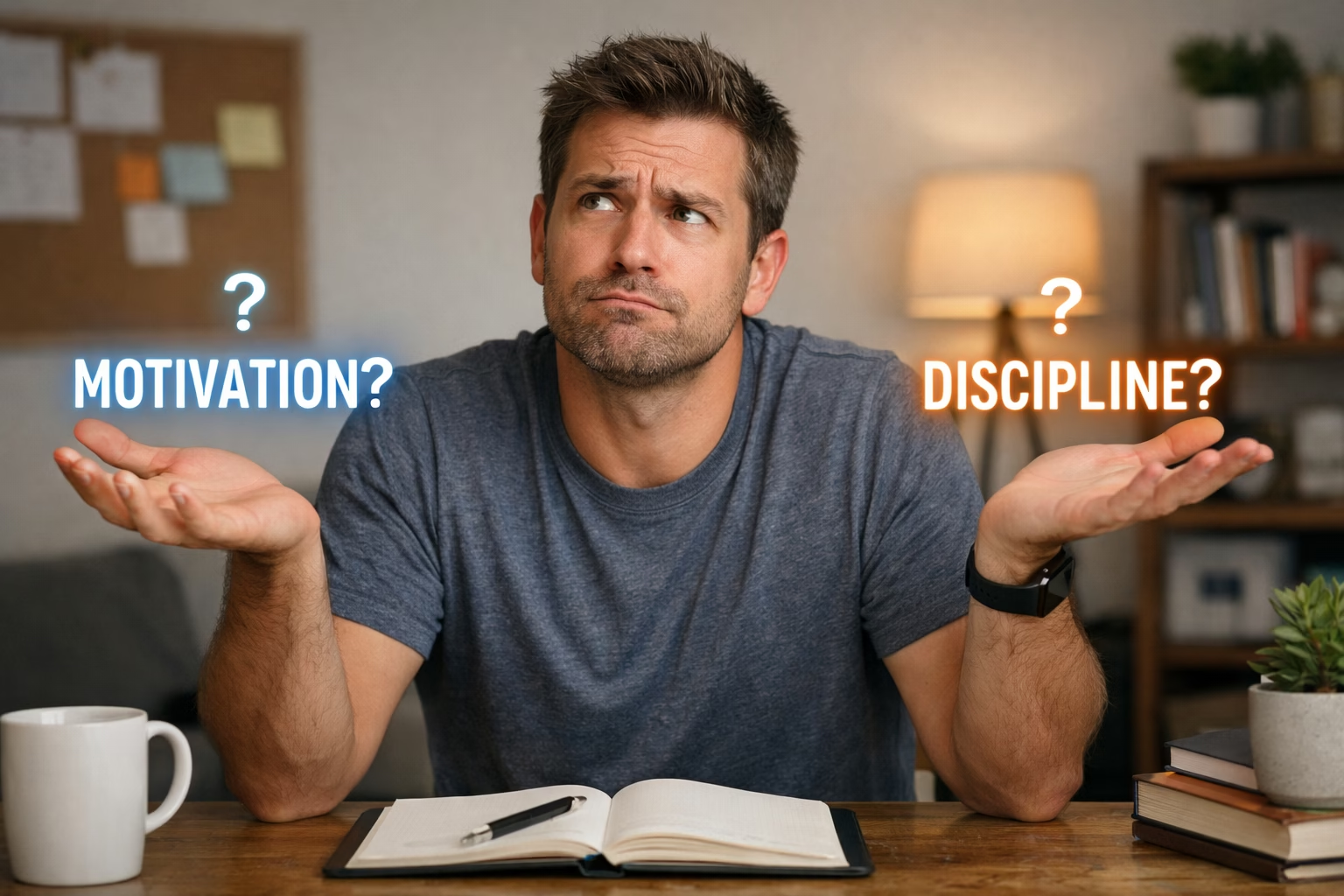
Why do your New Year’s resolutions always start with a burst of enthusiasm but fizzle out by February, leaving you wondering what happened to all that drive? Let’s define the difference between motivation and discipline.
We’ve all been there. You wake up one morning feeling inspired, ready to transform your life. You’re going to exercise daily, eat healthy, learn a new skill, or finally write that book. The motivation is electric—you can practically feel the success already.
Then real life happens. A busy week at work. A sick kid. Bad weather. Suddenly, that initial spark of motivation has vanished, and you’re back to your old patterns, wondering why you can’t seem to follow through on anything.
Here’s the uncomfortable truth: relying solely on motivation is, more often than not, a surefire road to failure. Motivation is often fleeting, and when we run out, we stop. The most successful people aren’t more motivated than you—they’ve simply learned to operate without depending on motivation at all.
Better Today understands that achieving your goals isn’t about finding the perfect motivational quote or waiting until you “feel like it.” It’s about understanding the powerful interplay between motivation and discipline, and knowing which one to lean on when it matters most. And if you prefer to watch a video, check it on our YouTube Channel below:
Advice Disclaimer: The strategies and insights shared here are for general educational and personal development purposes. For specific concerns about mental health, behavioral patterns, or goal achievement, consider consulting with a qualified therapist or life coach.
Understanding Motivation vs Discipline: The Core Difference
Motivation is the desire to do something, while discipline is the ability to do it consistently. Let’s break down what this actually means in your daily life.
Motivation is that initial spark—the fuel that drives you, compelling you to take action in your personal or professional life. It’s the excitement you feel when you imagine the end result: a healthier body, a successful business, a published book.
Psychologists have identified two types of motivation: intrinsic (from the inside) and extrinsic (from the outside). You might exercise because you genuinely enjoy it (intrinsic) or because you want to look good at your high school reunion (extrinsic).
Discipline, on the other hand, is something entirely different. Author Stephen Covey defines discipline as “the ability to make and keep promises and to honor commitments.” Discipline helps us do the right thing in the moment for long-term gain, even when we would rather be doing something else.
Here’s the critical insight: While motivation can come easily, discipline requires more effort and commitment. Motivation arrives like a gift; discipline is built like a muscle.
Why Discipline Wins (But Motivation Still Matters)
If you had to choose between motivation and discipline, discipline would win every single time. Here’s why:
When motivation stops, discipline tells us to push forward despite our feelings. And it takes practice to make our discipline strong.
Think about the last time you accomplished something meaningful. Was it because you felt motivated every single day? Absolutely not. You showed up when you were tired, distracted, busy, and unmotivated. That’s discipline—and that’s what separates dreamers from achievers.
James Clear highlights this in Atomic Habits: “disciplined people are better at structuring their lives without heroic willpower and self-control.” The secret isn’t superhuman motivation—it’s building systems and structures that make the right choices automatic.
But here’s where it gets interesting: research has shown that the most successful people use a combination of discipline and intrinsic motivation to achieve their goals.
The Winning Combination: Intrinsic Motivation + Discipline
Discipline and motivation are both equally important. Without discipline, we may struggle to follow through on our goals, while without motivation, we may lack the drive to pursue them in the first place.
Motivation provides you with the initial drive and enthusiasm to start working toward your goals, but it’s discipline that ensures you stay on track and make consistent progress—even on those days when you’re not feeling so motivated.
The magic formula looks like this:
Intrinsic Motivation (your why) + Discipline (your systems) = Sustainable Success
When deciding which healthy habits you would like to implement, it’s essential to think about how you will get enjoyment out of this activity. If you hate running, disciplining yourself to run daily is a losing battle. Find movement you actually enjoy, then use discipline to show up consistently.
Your Practical Action Plan: Building Discipline That Lasts
Action Step 1: Start Ridiculously Small
The most disciplined people aren’t more motivated—they make good choices inevitable and bad choices inconvenient. Don’t try to exercise for an hour if you haven’t moved in months. Start with five minutes. Not thirty. Not fifteen. Five.
It can take anywhere between 18 and 264 days to form a new automatic habit. Starting small dramatically increases your success rate because you’re building the identity of someone who follows through, not just completing tasks.
This week: Choose ONE micro-habit so small it feels almost silly. Want to read more? Read one page before bed. Want to exercise? Do five push-ups every morning. Want to meditate? Take three conscious breaths when you wake up.
Action Step 2: Design Your Environment for Success
Your tired, stressed future self won’t make good decisions, so your current self must eliminate the decision. Make doing the right thing the easiest option available.
Want to stop scrolling at night? Charge your phone in another room. Want morning workouts? Sleep in your gym clothes. Want to eat healthier? Prep vegetables on Sunday, so they’re ready when you need them.
This week: Identify your biggest discipline challenge and redesign your environment to support success. Remove one major temptation or obstacle that’s sabotaging your goals.
Action Step 3: Connect to Your Deep Why
Intrinsic motivation and discipline are the winning combination for achieving goals. Surface-level motivation (“I should lose weight”) fades quickly. Deep motivation (“I want to be healthy enough to play with my grandchildren”) provides the fuel discipline needs to keep burning.
This week: Write down your goal and ask “why” five times in a row. Each answer goes deeper than the last. By the fifth “why,” you’ll uncover the intrinsic motivation that will sustain you when discipline feels difficult.
Affiliate Disclaimer: Some productivity tools or resources mentioned in related content may include affiliate links, though all strategies shared are based on behavioral science and genuine effectiveness.
The Reality: Discipline Creates Motivation
Here’s a counterintuitive truth that changes everything: Motivation can come before discipline, but discipline can also create motivation.
You don’t need to wait until you feel motivated to start. Start with discipline, and motivation often follows. That first five-minute workout feels hard, but completing it generates motivation for tomorrow’s session. That one page of reading creates an appetite for more.
Research from Harvard Business School professor Teresa Amabile reveals the power of progress. When employees make significant progress in work that matters to them, they feel more intrinsically motivated.
Action creates motivation far more reliably than motivation creates action. This is why discipline wins.
When Both Work Together: Your Success Formula
While extrinsic motivation might get you started, the combination of discipline and intrinsic motivation will stop you from giving up.
Think of motivation as the ignition and discipline as the steering wheel. Motivation gets your car started, but discipline keeps you on the road through traffic, bad weather, and detours. You need both, but if you had to choose one to depend on, choose discipline every time.
The most disciplined people exhibit the most self-control and enjoy their habits. When you build discipline around activities you find intrinsically motivating, you create an unstoppable combination.
Top 5 Books to Go Deeper
1. “Atomic Habits” by James Clear
Clear’s masterpiece reveals how tiny changes create remarkable results through habit stacking and environment design. His framework makes discipline feel effortless by focusing on systems rather than willpower, perfect for sustainable behavior change.
2. “The Motivation Myth” by Jeff Haden
Haden dismantles the idea that motivation precedes action, proving that discipline and small wins create motivation. His practical approach shows how successful people build momentum through consistent effort rather than waiting for inspiration.
3. “Discipline Equals Freedom” by Jocko Willink
Former Navy SEAL Willink’s no-nonsense approach to discipline transforms how you view self-control. His philosophy emphasizes that discipline in all areas of life creates the freedom to achieve anything you want.
4. “The Willpower Instinct” by Kelly McGonigal
McGonigal combines neuroscience and psychology to explain how self-control actually works. Her science-based strategies help you understand and strengthen your discipline muscle while managing the limitations of willpower effectively.
5. “Drive” by Daniel Pink
Pink explores the science of motivation, revealing what truly drives human behavior. His insights on autonomy, mastery, and purpose help you tap into intrinsic motivation while building sustainable systems through discipline.
Your Choice: Waiting or Building
You have two options from this moment forward:
Option 1: Keep waiting for motivation to strike. Keep starting strong on Monday and quitting by Thursday. Keep wondering why other people seem to have more willpower than you.
Option 2: Accept that motivation is unreliable, build discipline through ridiculously small habits, design your environment for success, and connect to your deep why. Show up even when—especially when—you don’t feel like it.
The people you admire aren’t more motivated than you. They’ve simply learned that discipline beats motivation every single time. They’ve built systems that carry them through the days when motivation vanishes.
Motivation and self-discipline work with each other and help push your performance higher. It’s a bit of a 1+1=3 formula. When you combine the inspiration of intrinsic motivation with the consistency of discipline, you create something far more powerful than either alone.
If you stopped waiting to “feel like it” and simply showed up every day for the next six months, what would become possible in your life?
Want more tips like this? Follow @BetterToday for weekly ways to grow in health, mindset, and relationships.
About the Author
